
Sharing Experiences on Applying to and Studying in U.S. Master’s and PhD Programs in Human Resource Management (2025/12/23)
2025/12/23
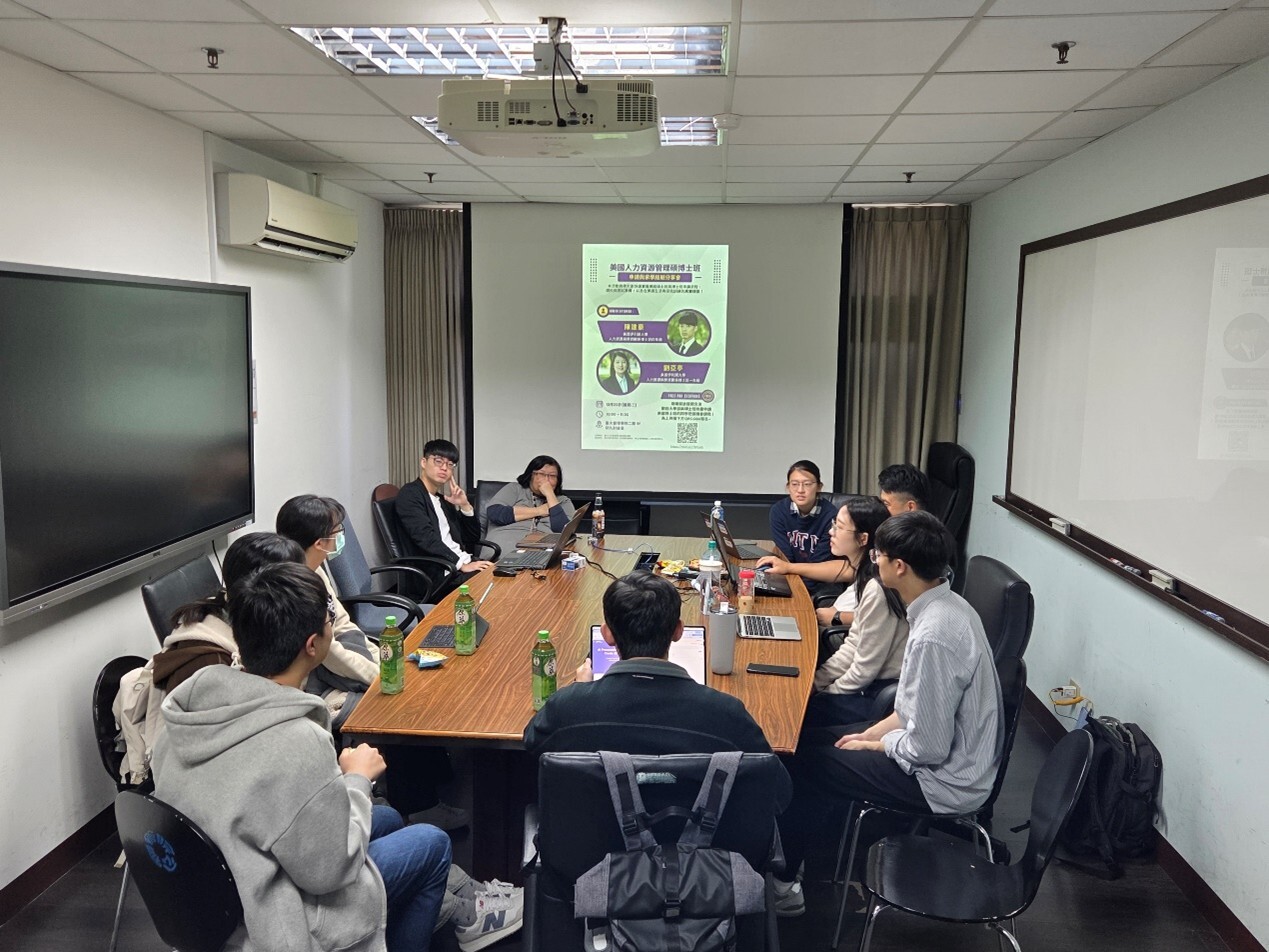
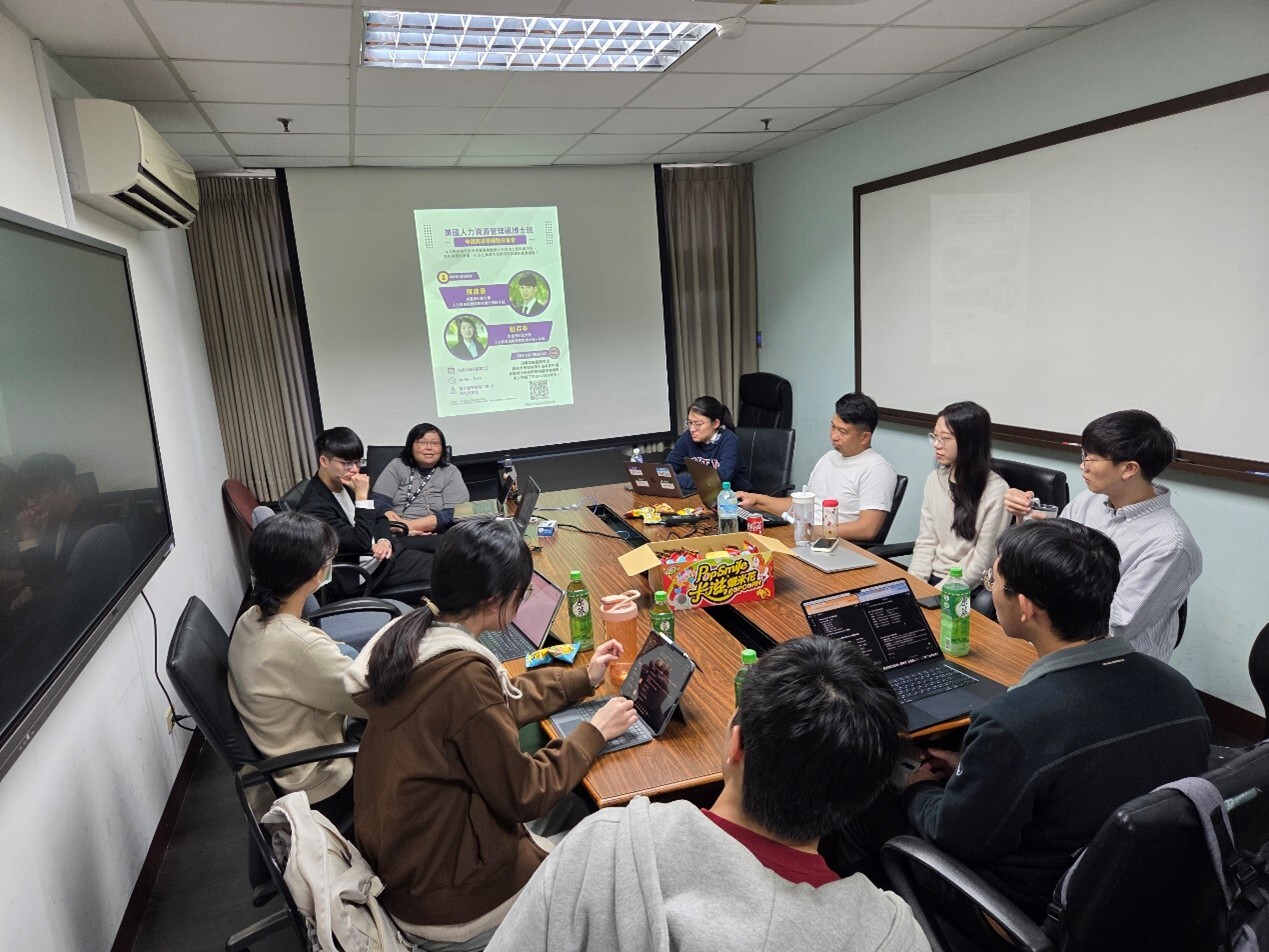
The event, “Sharing Experiences on Applying to and Studying in U.S. Master’s and PhD Programs in Human Resource Management,” featured first-hand insights from two senior alumni currently pursuing PhD degrees in HR-related fields in the United States. Through their personal experiences, participants gained a concrete and practical understanding of the application process, academic training, and everyday life in the U.S., with a clear explanation of the differences in goals and preparation strategies between master’s and doctoral programs.
Regarding the application process, master’s programs are relatively more flexible. An increasing number of universities no longer require GRE or GMAT scores and instead place greater emphasis on applicants’ overall background, coursework, and career plans. In contrast, PhD programs are highly competitive: most still require the GRE and place strong weight on research potential, methodological training, and alignment with prospective advisors’ research interests. Both speakers consistently advised prospective doctoral applicants to plan their exams early and to establish research interactions with potential letter writers well in advance. Accumulating experience as a research assistant (RA), as well as producing conference papers or working papers, was highlighted as essential for strengthening one’s academic profile.
In terms of school selection and interview preparation, the speakers emphasized that applicants should look beyond rankings and instead gain an in-depth understanding of each program’s research orientation and faculty composition. PhD interviews often directly assess applicants’ ability to articulate their research interests, data sources, and methodological approaches; candidates must clearly explain what they want to study, why it matters, and how they plan to conduct the research. Master’s program interviews, by contrast, tend to focus more on learning motivation and future career development, making it crucial to clearly demonstrate how one’s background connects to the HR field.
As for life in the United States, the speakers candidly noted that pursuing a PhD is far from a romanticized study-abroad experience. It entails a highly disciplined and pressure-intensive research life. Factors such as cost of living, regional differences, and financial planning require careful consideration. Nevertheless, the experience also offers immersive academic training, cross-cultural perspectives, and a pivotal foundation for long-term career development. Beyond providing practical application advice, the event encouraged participants to reflect on a fundamental question—who they aspire to become in five years—and to use that vision as a guide for making informed academic and life choices.
Click Num:
Share
