
2025/10/21-10/25
Exploring Tokyo’s Evergreen Enterprises: Discovering the Core Wisdom of Generational Legacy and Sustainable Governance
Japan is renowned as the “Land of Long-Lived Enterprises,” home to the world’s largest number of century-old firms. The enduring success of these firms lies in several key factors: a relatively stable competitive environment unique to an island nation, a deeply ingrained culture of hospitality, and strong traditions emphasizing the continuity of family businesses. Yet, each enterprise has forged its own distinctive path to enduring success and sustainability.
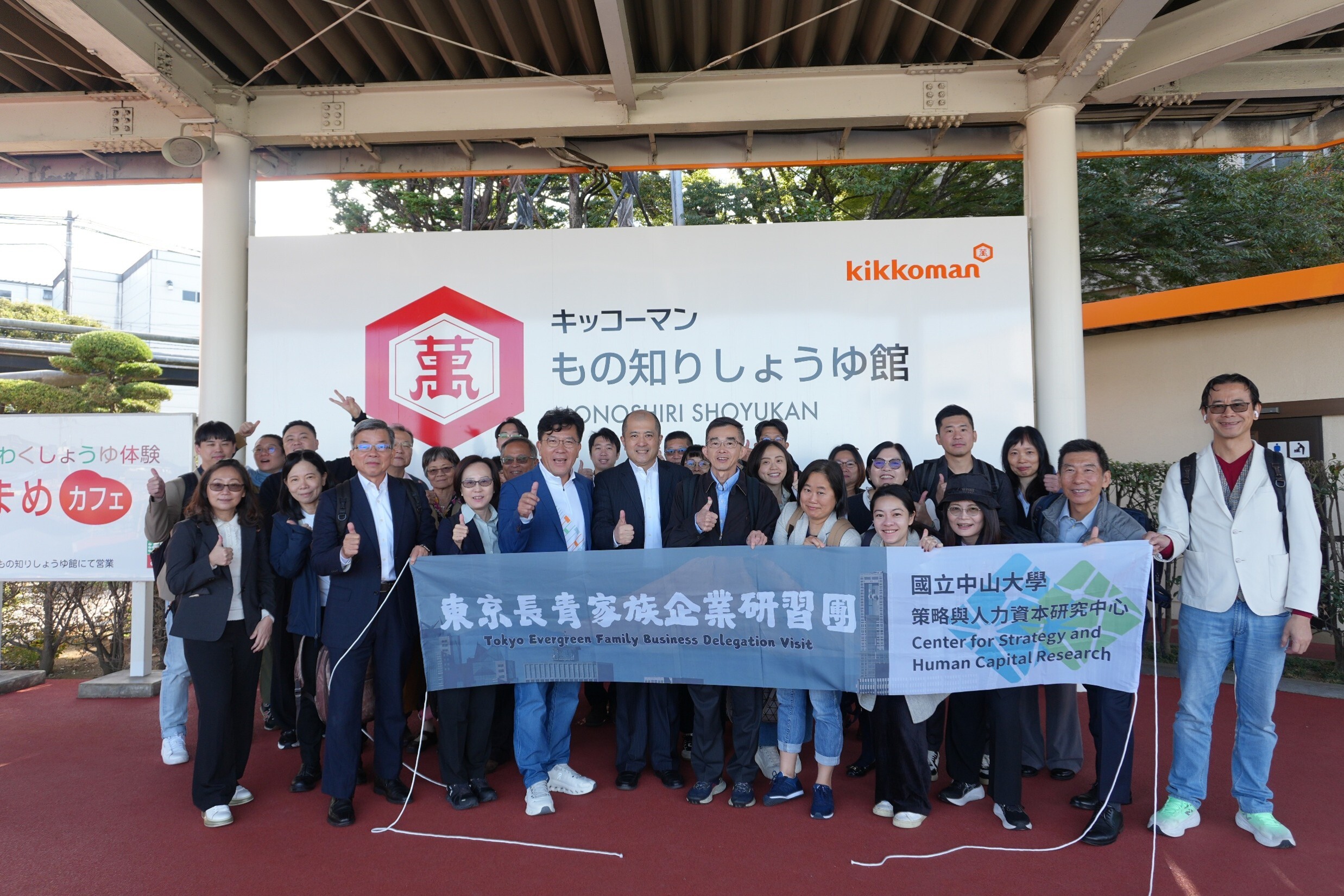
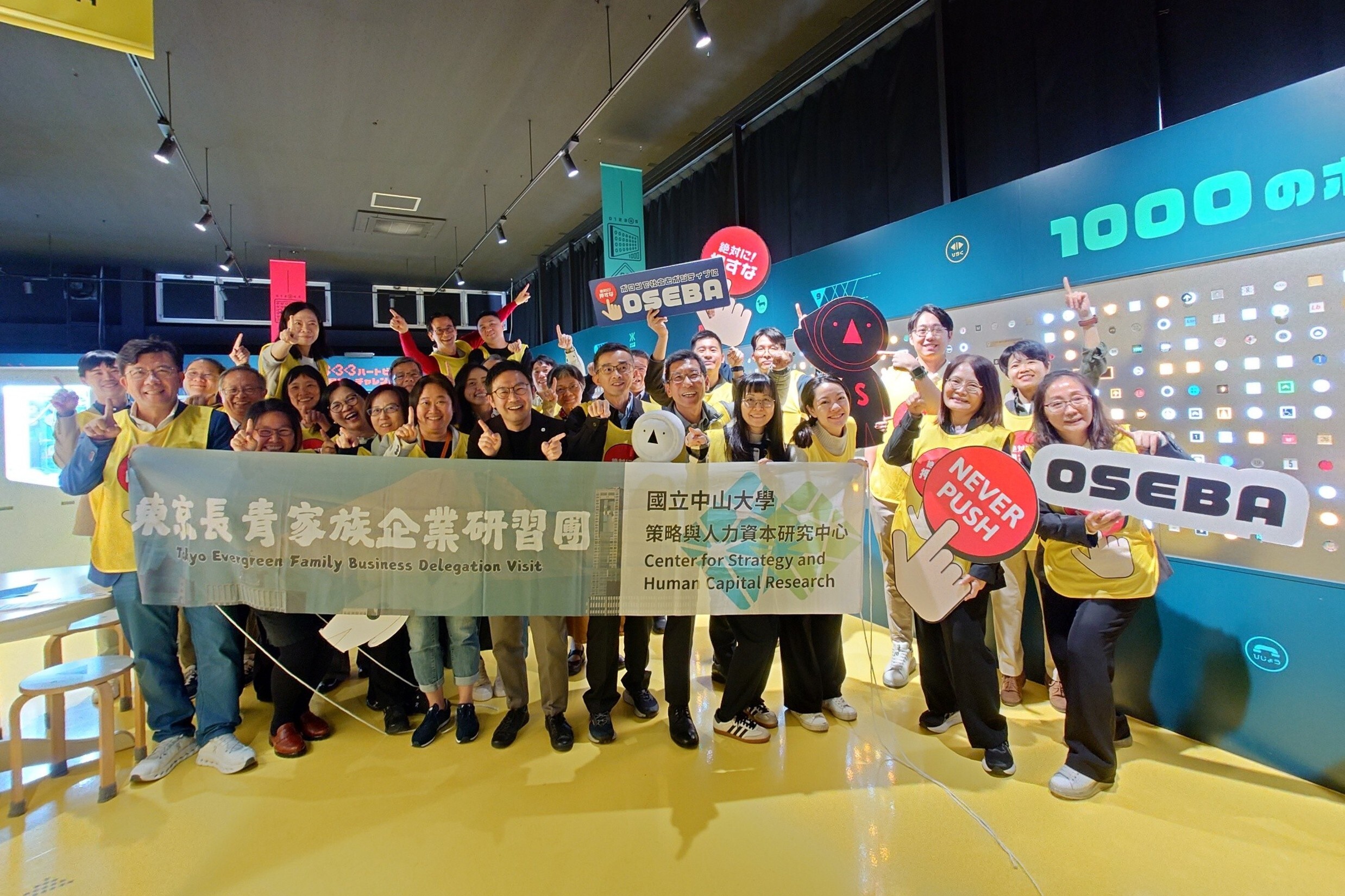
To gain deeper insight into their management philosophies, core values, and approaches to sustainable governance, the Center for Strategy and Human Capital Research at National Sun Yat-sen University organized the 2025 Tokyo Evergreen Family Delegation Visit from October 21 to 25, 2025. Partnering with UNI-OAO TRAVEL SERVICE CORP., the program selected five representative Japanese companies for site visits and exchanges. Led by Professor Chen Shyh-Jer, Director of the Center, the delegation included scholars from multiple universities and industry representatives, embarking on a five-day program of academic exchange and field observation in the Tokyo metropolitan area.
The group visited five iconic Japanese long-established enterprises—Nisshin OilliO, Yamato Transport, Gakken Holdings, Kikkoman Corporation, and Shimada Electric. Spanning industries from food manufacturing and logistics to publishing, education, and precision engineering, these visits offered a comprehensive look at how Japan’s long-standing companies balance tradition and innovation—sustaining business vitality through effective governance, talent development, and ESG-driven sustainability strategies.
Roots of Sustainability, Wings of Innovation
Nisshin OilliO – A Corporate Evolution Centered on Sustainability
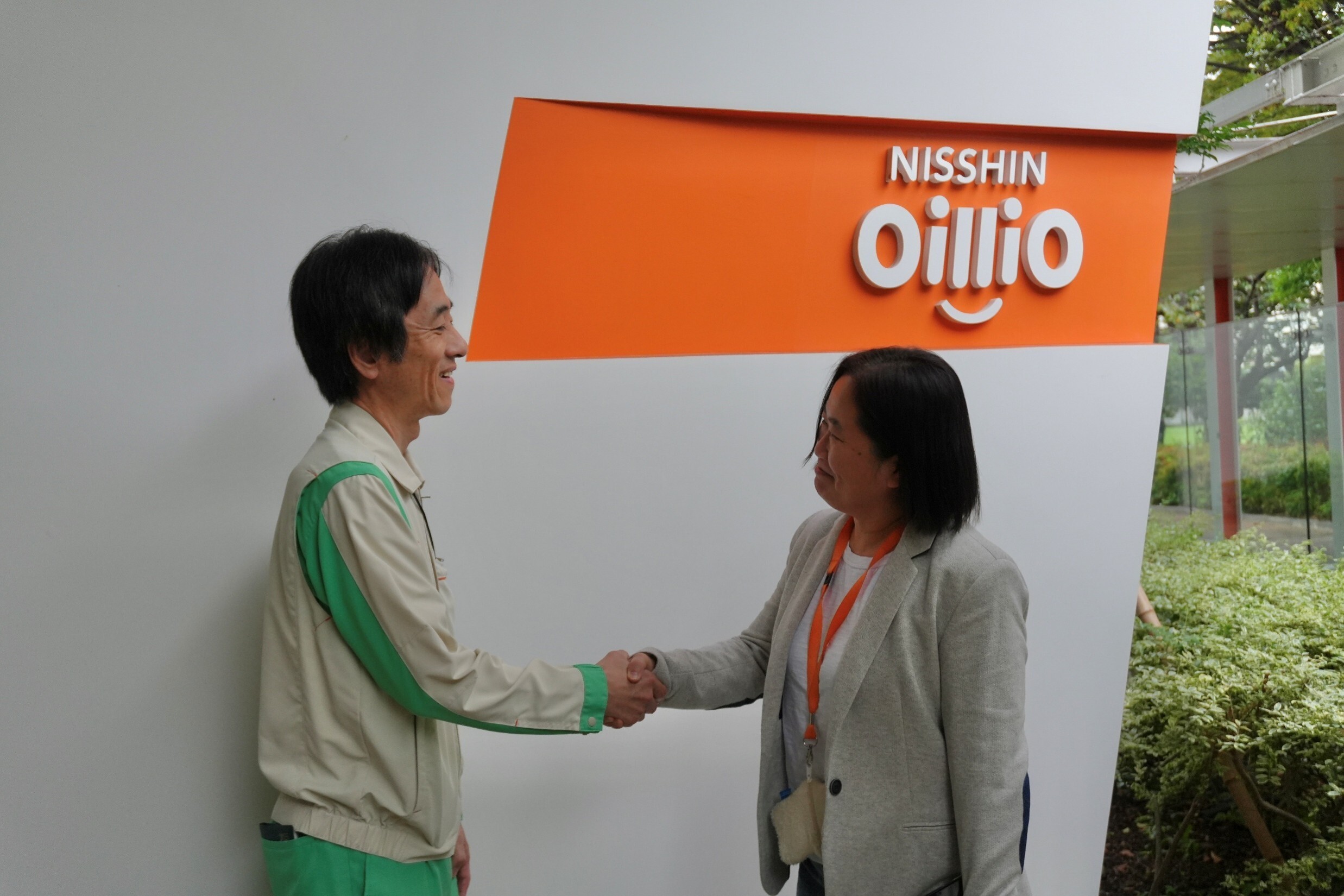
The first stop of the delegation, Nisshin OilliO, stands as a leader in Japan’s oil manufacturing industry, producing a wide range of products including edible oils and health-oriented lipid solutions. Guided by its brand philosophy of “Delicious, Healthy, and Beautiful,” the company continues to advance its Vision 2030 strategy, embodying a people-centered management philosophy.
Founder Okura Kihachirou is regarded as a pioneer of ESG thinking in Japan, having integrated the pursuit of sustainability deeply into the company’s business objectives. Nisshin OilliO actively advances initiatives in sustainable sourcing, carbon reduction, and social contribution—adopting RSPO-certified sustainable palm oil standards, supporting smallholder farmers, and promoting ecological restoration. At the same time, it strengthens internal human resources and organizational capabilities, embedding sustainability as a core element of corporate culture. Through these efforts, Nisshin OilliO exemplifies a model of balanced sustainability—harmonizing economic growth, social responsibility, and environmental stewardship.

Yamato Transport – Sustainable Innovation from the Customer’s Perspective
Yamato Transport , best known for its Black Cat brand, is a pioneering force in Japan’s parcel delivery and logistics industry. Guided by the principles of “Service First” and “Small-Lot Delivery,” the company revolutionized Japan’s home delivery landscape. Under the leadership of its second president, Masao Ogura, Yamato championed a customer-centric philosophy. He drove innovation from the ground up through process improvement and a culture of continuous learning. His belief in “innovation begins on the front line” laid the foundation for the company’s enduring growth.
Today, Yamato Transport continues to evolve by integrating technology and sustainability as twin engines of progress. Through the KURONEKO Innovation Fund, the company invests across sectors in emerging fields such as AI, autonomous driving, and green logistics. Balancing the triad of cost, service quality, and employee workload, Yamato ensures that innovation and workforce sustainability advance hand in hand—cementing its reputation as a long-standing service brand that harmonizes efficiency, environmental responsibility, and human-centered values.


Gakken Holdings – Education as the Engine of Social Innovation
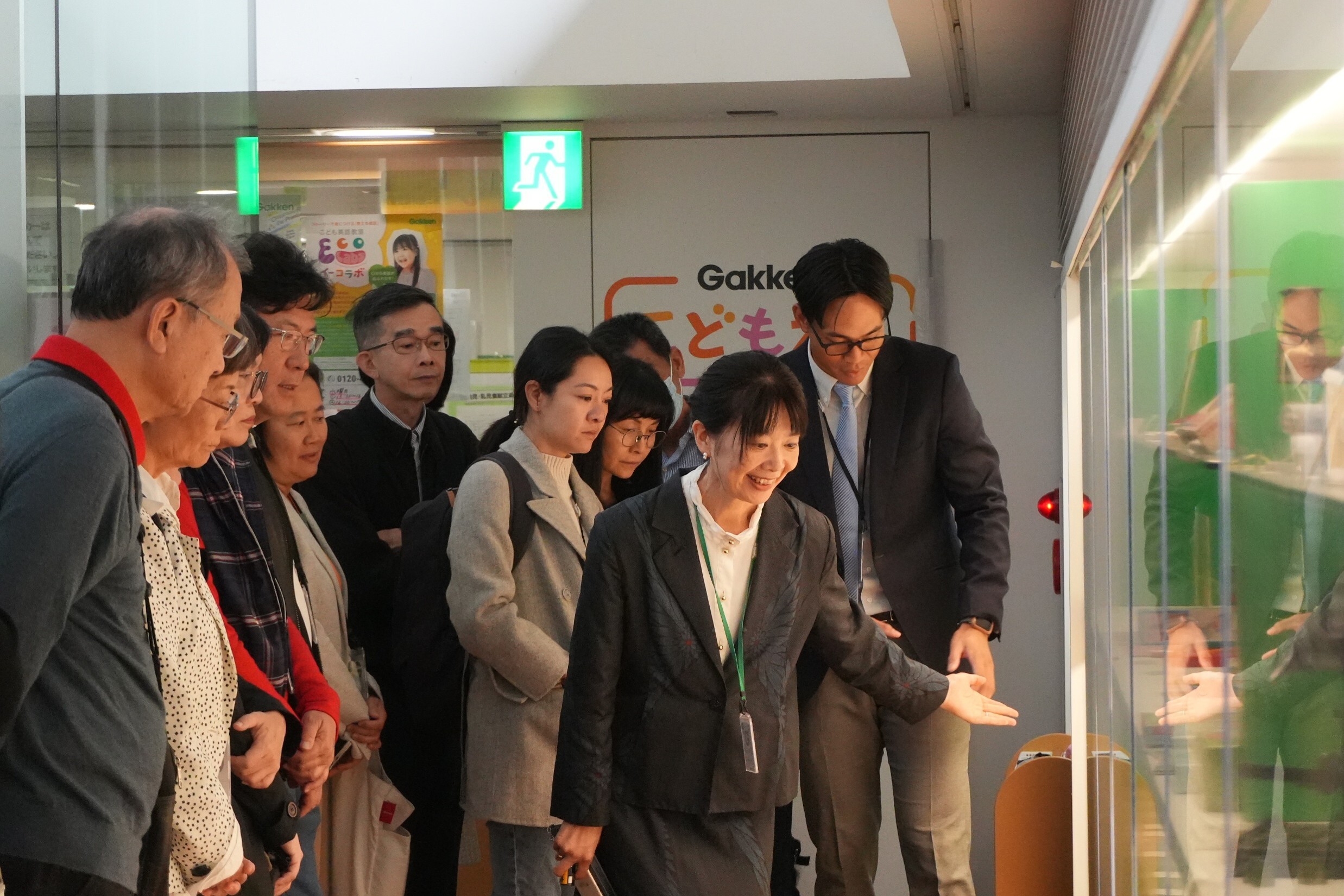
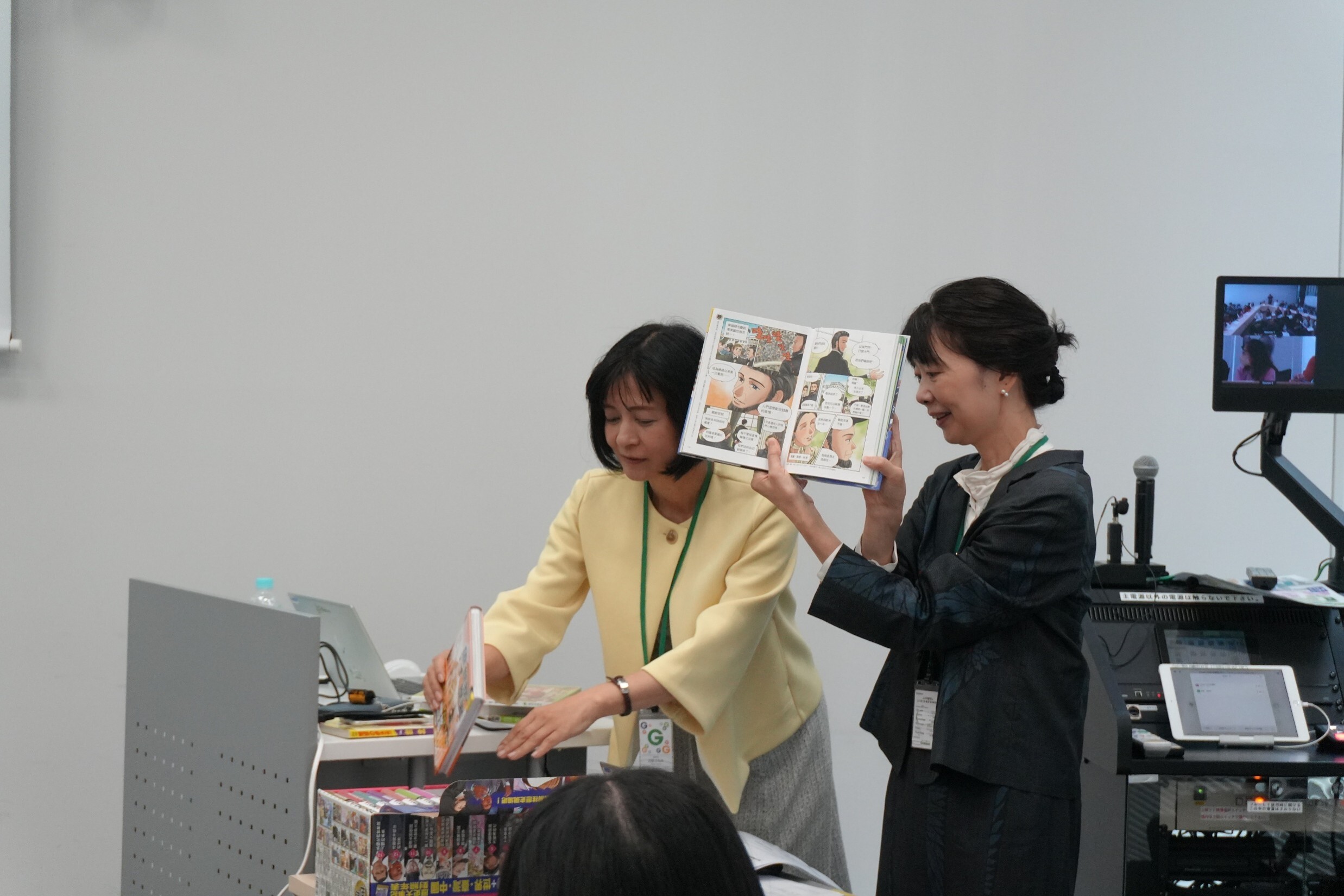
Gakken Holdings began as an educational publishing company in postwar Japan, guided by the mission of “addressing social challenges through education.” Over time, it has diversified its operations to encompass early childhood education, senior care, and healthcare services, forming an integrated model of “Education × Healthcare × Community.”
Its renowned brand Chikyu no Arukikata (“Globe-Trotter Travel Guide”) was successfully revitalized after the pandemic through a cross-media strategy that blends content, distribution, and community engagement—transforming it into a vibrant cultural innovation brand.
With education as its foundation for sustainability, Gakken embraces the concept of Double Materiality—evaluating its activities from both financial and social perspectives. The company has established a Sustainability Promotion Office to drive initiatives that balance corporate growth with social value creation, demonstrating its capacity to continually generate positive impact and innovation in an ever-changing world.
Craftsmanship and Innovative Heritage
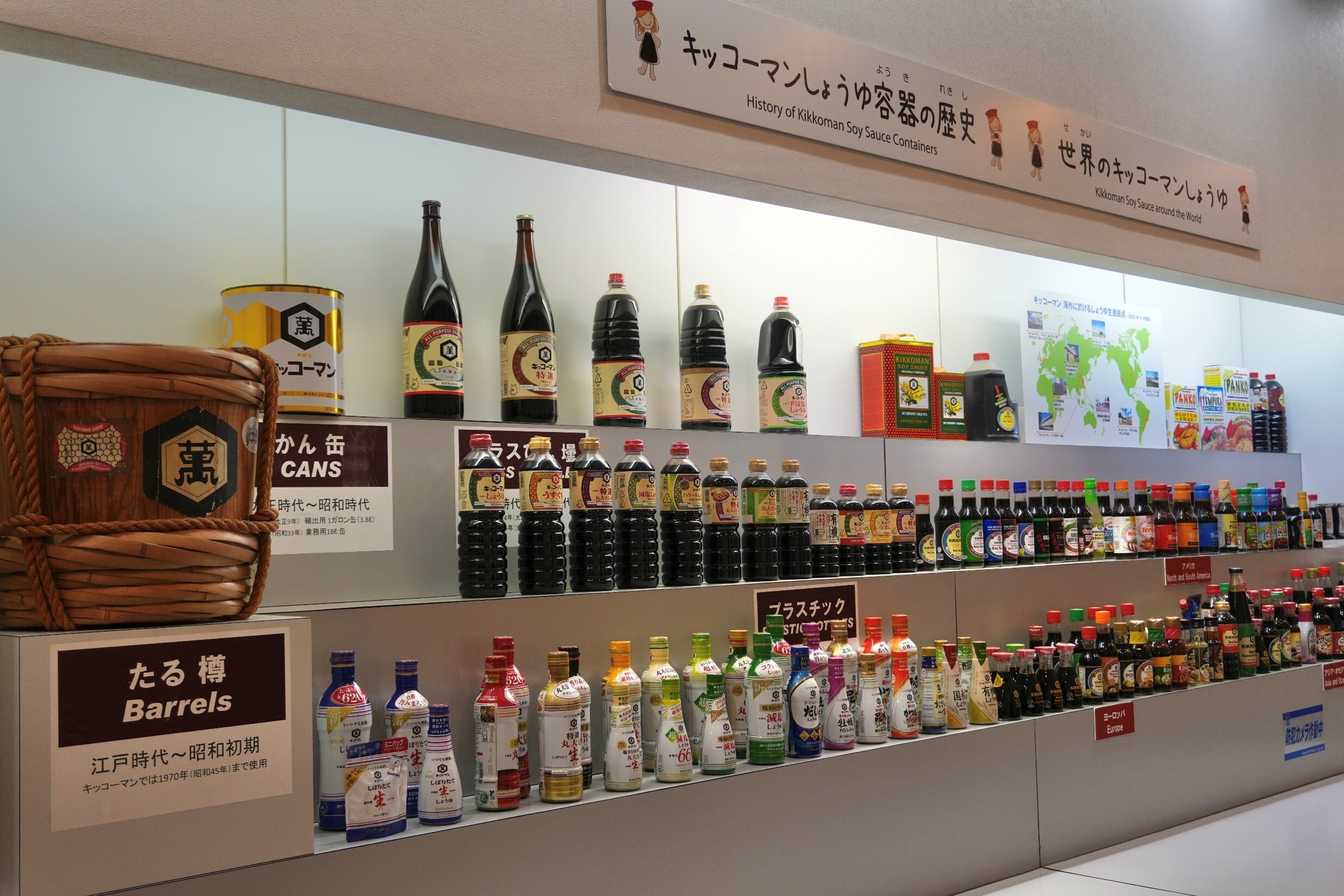
Kikkoman – Modern Insights from Three Centuries of Brewing Tradition
With a history spanning more than 300 years, Kikkoman exemplifies a model of longevity among Japan’s family-owned enterprises. The company is jointly governed by eight founding families and operates under a structured system of succession and rotation that upholds the principle of “selecting the most capable rather than merely the heir.” This framework, overseen by a supervisory committee, ensures a balance between family legacy and professional governance, preventing the concentration of privilege that can lead to corporate decline.
Guided by the philosophy “To know umami is to know happiness,” Kikkoman remains devoted to the art of traditional brewing while advancing globally adaptive strategies and promoting food culture education. The company also actively engages in environmental initiatives such as wetland conservation and water quality improvement, integrating traditional craftsmanship with a philosophy of harmony with nature. Through this blend of heritage and innovation, Kikkoman exemplifies sustainable family governance, revitalizing centuries-old tradition into contemporary relevance and embodying a brand that unites cultural continuity with social value.
Shimada Electric – Turning Manufacturing into a Creative Experience
Founded in 1933, Shimada Electric began as a manufacturer of switch panels and gradually evolved to specialize in elevator lobby display systems, offering one-stop customized solutions to meet diverse market needs. Under the leadership of its fifth-generation president, Masataka Shimada, the company has embraced a philosophy of “human-centered innovation,” driving corporate reform and establishing a modern management framework.
Within the organization, Shimada promotes five key cultural values—Keep Going, Playful, Lively, Creative, and Challenging—cultivating a joyful workplace through gamified systems and open communication. The company also established the “Button Café” and opened its factory (OSEBA) to visitors, strengthening employees’ sense of belonging and transforming them into brand ambassadors, while simultaneously sharing its philosophy with customers and the public.
At its core, Shimada Electric strives to make employees proud of their company. Through philosophy lectures, factory tours, and open-day events, the firm continues to pass down its corporate spirit across generations—realizing a harmony of employee well-being, brand influence, and social value.

Legacy, Innovation, and Human-Centered Values: Sustainability Insights from Tokyo’s Evergreen Enterprises
The 2025 Tokyo Evergreen Family Delegation Visit examined five representative long-established companies, providing profound insights into the factors behind Japan’s enduring enterprises: respecting traditional values, internalizing core principles, and integrating innovation with sustainability strategies.
From Nisshin OilliO’s sustainability-driven evolution, Yamato Transport’s customer-centric process innovation, and Gakken Holdings’ use of education to generate social value, to Kikkoman’s three centuries of meticulous brewing and Shimada Electric’s human-centered innovation, a consistent theme emerges: sustainability, innovation, and human-centered management permeate governance, talent development, and brand culture.
These experiences demonstrate that long-term corporate success relies not merely on technology or scale, but on embedding values into daily operations—continuously generating social and environmental benefits, balancing economic, cultural, and human priorities, and offering valuable lessons for modern enterprises pursuing sustainable growth.
