
From Exchange to Collaboration:Visit to Research Centers in the United Kingdom (2025/11/03-11/07)
2025/11/03-11/07
From Exchange to Collaboration:Visit to Research Centers in the United Kingdom
To deepen the Center’s international connections and strengthen cross-border research collaboration, the Center’s delegation—Co-Director Prof. Po-Lien Chen, Associate Research Fellow Prof. Min-Nan Chen, and Assistant Research Fellow Prof. Chia-Hao Ho—undertook a five-day academic exchange visit to the United Kingdom from November 3 to November 7. Through visits to three higher education institutions and the UK Office of the Industrial Technology Research Institute (ITRI), the team gained a multi-dimensional understanding of emerging academic trends, cross-national collaboration mechanisms, and industry–academia linkage models in the UK. The trip was both intensive and rewarding, providing the Center with deeper insights into international cooperation, family business and sustainability governance, and technological innovation, thereby laying groundwork for future collaboration.
University of Nottingham
The first stop was the University of Nottingham, where the Center team met with Prof. Chun-Yi Lee, Director of the Taiwan Research Hub, to discuss the planning of the Taiwan Research Hub Conference 2026, which both institutions will co-host. The meeting included on-site inspections of potential venues—main halls and breakout rooms—covering seating arrangements, spatial layout, audio–visual systems, remote/streaming capabilities, and flexible arrangements for receptions and networking. These details will support the smooth execution of next year’s conference from both administrative and technical perspectives.
Beyond the conference, the two sides exchanged views on recent developments in UK higher education and evolving trends in the academic labor market, allowing the Center to gain a more comprehensive understanding of the challenges and transitions faced by UK academia. The discussion also extended to concrete academic exchange opportunities, including short-term visits (faculty visits and scholar exchanges) and models for cross-institutional research collaboration among researchers.
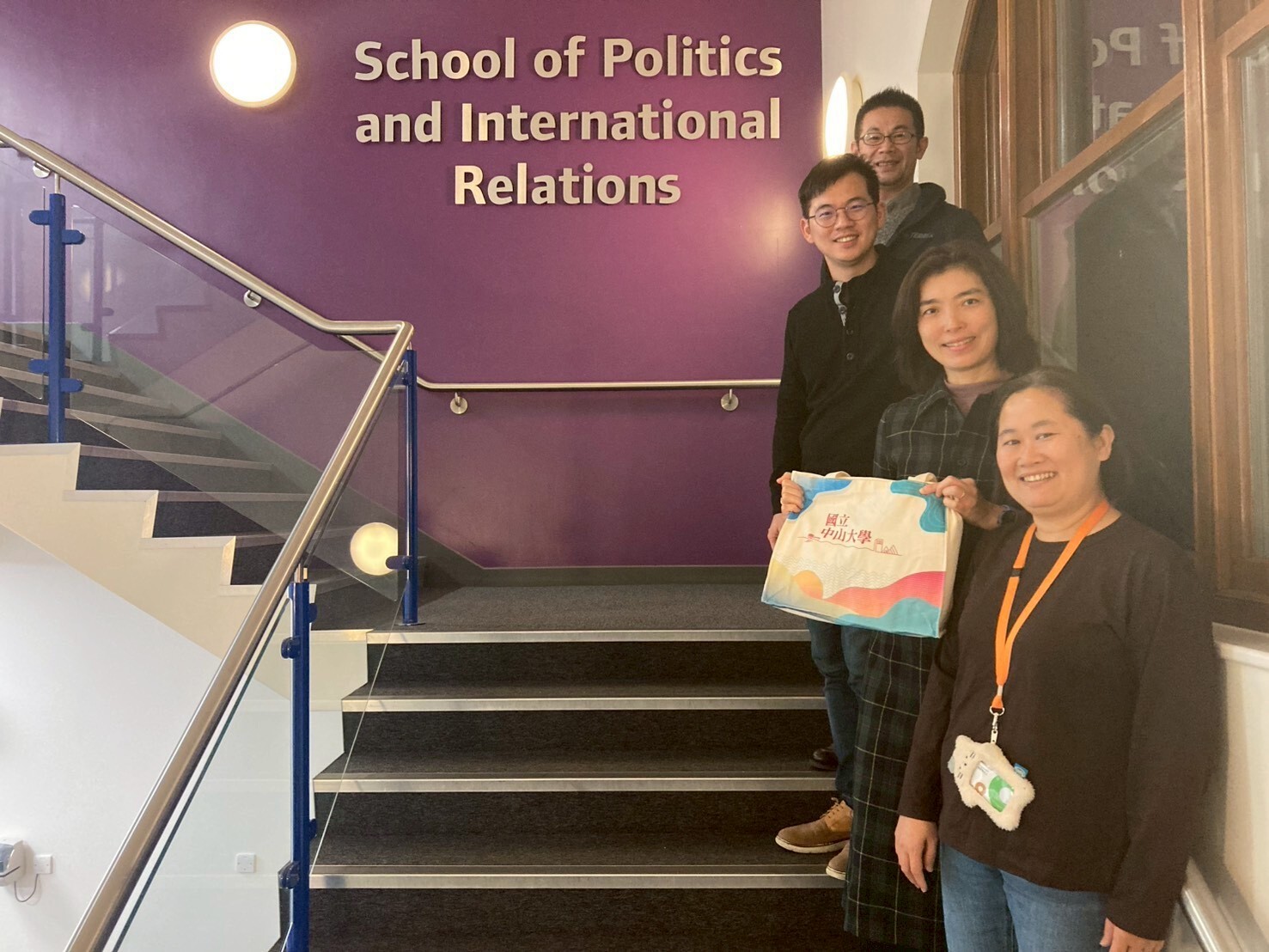
(Group photo with Dr. Chun-Yi Lee at the University of Nottingham)
Royal Holloway, University of London
The second visit took place at the School of Business and Management at Royal Holloway, University of London. Both teams began by sharing their ongoing research—current submission topics, datasets, and methodological approaches—collectively mapping the landscape of potential cross-country collaborations. The discussion then moved toward establishing an online academic dialogue mechanism between the two institutions, beginning with exchanges based on respective research expertise and interests, and gradually shaping possibilities for future collaboration.
The meeting further explored institutional frameworks for faculty exchanges, student mobility, short-term courses, and joint international workshops. Both sides also suggested using the UK–Taiwan Joint Project as an official starting point to initiate structured collaboration.
In addition, the 2026 British Academy of Management Conference (BAOM)—to be hosted at Royal Holloway—was identified as an important platform for joint academic activities. Prof. Paul Robson (International Lead) and Prof. Hsing-Fen Lee proposed co-organizing an academic workshop at the annual meeting as a forum for bilateral scholarly engagement.
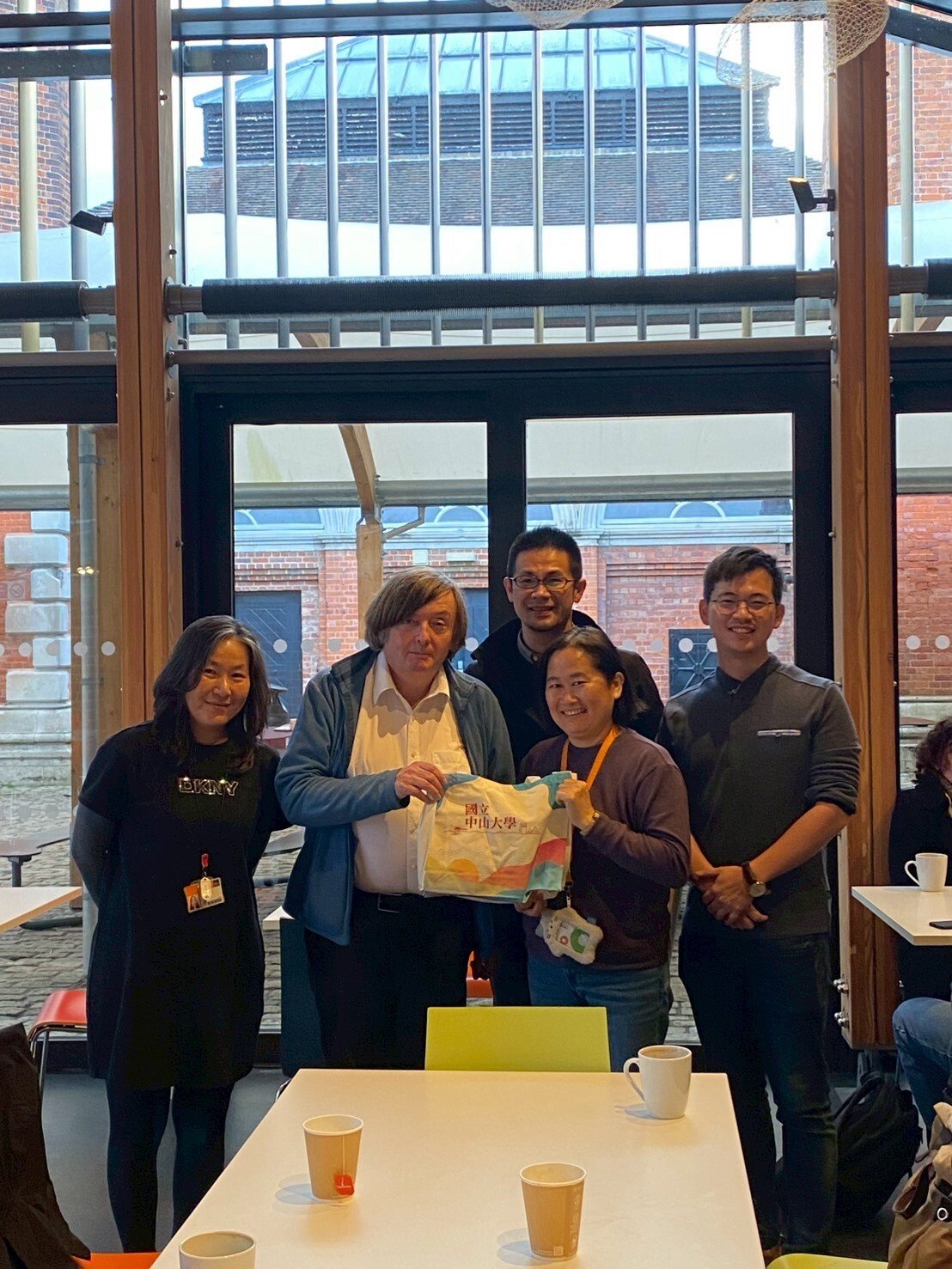
(Group photo with Dr. Hsing-Fen Lee and Dr. Paul Robson at Royal Holloway Business School)
Brunel University London
Another visit was paid to Brunel University London’s Sustainable Family Enterprises Research Lab, which has strong foundations in family business succession, leadership transformation, digital transformation, green innovation, and other sustainability-related topics. With extensive collaborations across multiple international family business research centers, Brunel’s research orientation is highly aligned with that of our Center.
During the meeting, discussions ranged from sustainable family enterprise development to intergenerational succession and ESG trends, along with concrete ideas for potential future collaborations. The Brunel team shared their “corporate visit + seminar course” model, which allows for customized program design based on industry or thematic focus—for example, a one-day corporate visit combined with a one-day on-campus seminar, or half-day industry/half-day academic formats. This model provides a clear blueprint for the Center’s future planning of Taiwan-to-UK enterprise study tours.
Brunel has also developed a complete Executive Education portfolio—including courses on Digital/AI Transformation in Family Businesses, Sustainable Family Business Governance, and Succession and Transition Strategies—which could serve as valuable references for the Center’s future training programs and overseas study initiatives.
On research collaboration, Brunel introduced its annual Case Writing Conference, an important platform that gathers global family business researchers and collaborates with institutions such as Zhejiang University, Tsinghua University, The Chinese University of Hong Kong, and Ningbo University. The Brunel team extended a formal invitation for the Center to join its international scholars network, granting early access to events, research initiatives, and academic collaboration opportunities, and enabling direct participation in multinational research alliances—an important step toward building long-term cross-border research partnerships.
Through this exchange, the Center gained a clearer understanding of Brunel’s maturity in industry engagement, modular program design, and consultancy-oriented operations—approaches that strongly align with the Center’s future development blueprint. Brunel’s model demonstrates that when family business research is closely linked with industry needs, it can form replicable and scalable collaboration frameworks; international scholar networks and faculty mobility mechanisms further provide an essential foundation for cross-national family business research. These insights will inform the Center’s efforts to gradually establish a more systematic research structure and industry collaboration model.
(Group photo with Dr. Christine Chou and Ms. Jing Chen at the ITRI UK Office)
ITRI UK Office
The delegation also visited the London-based UK Office of the Industrial Technology Research Institute (ITRI), a key hub for Taiwan–UK technological collaboration. As a frontline base for linking UK and European research capacities, the Office focuses on connecting scientific and industrial ecosystems, monitoring technology policy and R&D program trends, and facilitating research cooperation between Taiwan and the UK in fields such as semiconductors, advanced manufacturing, net-zero technologies, AI, smart manufacturing, cybersecurity, and communications.
Hosted by Dr. Christine Chou and her team, the discussion covered current priorities in Taiwan–UK technology and industrial collaboration, and explored the possibility of utilizing ITRI’s international cooperation programs as research and teaching platforms—for instance, collecting cross-border collaboration data, developing international case studies, and building comparative research foundations. Both sides also discussed connecting southern Taiwan industries with ITRI’s UK initiatives to promote deeper trilateral industry–academia collaboration.
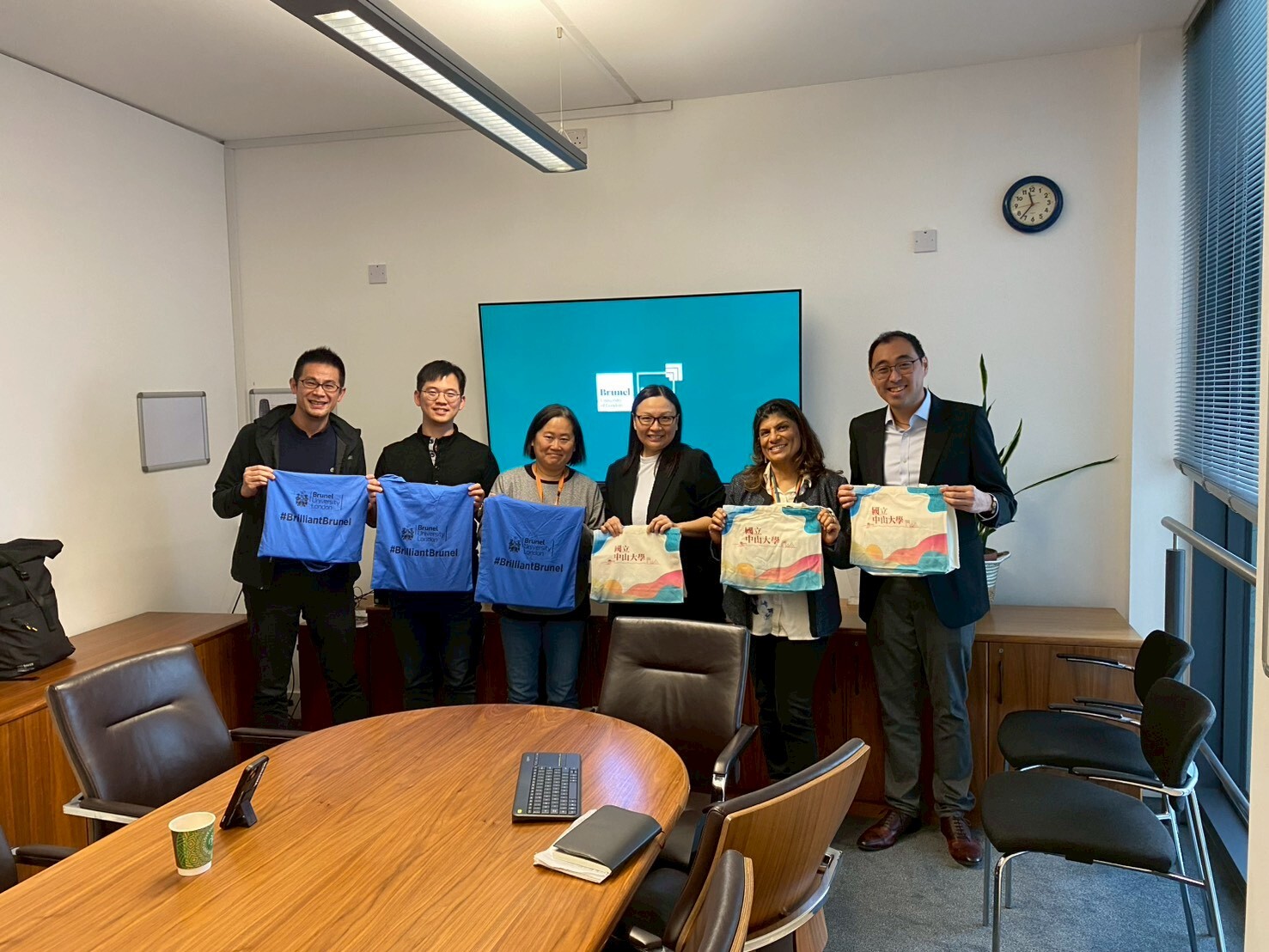
(Group photo with Dr. Wai Wai Ko and Dr. Kiran Kandada at Brunel Business School)
Throughout the trip, all institutions expressed strong interest in collaboration. Through a series of concrete discussions, the contours of future cross-border cooperation gradually took shape. Whether it was the University of Nottingham’s planning for joint conferences and research partnerships, Royal Holloway’s enthusiasm for research exchange and faculty/student mobility, or Brunel’s formal invitation to join its international scholar network, each development reflects significant progress in the Center’s international academic engagement.
