2025/10/29-10/30
Cornell University ILR School – CAHRS Partner Meeting
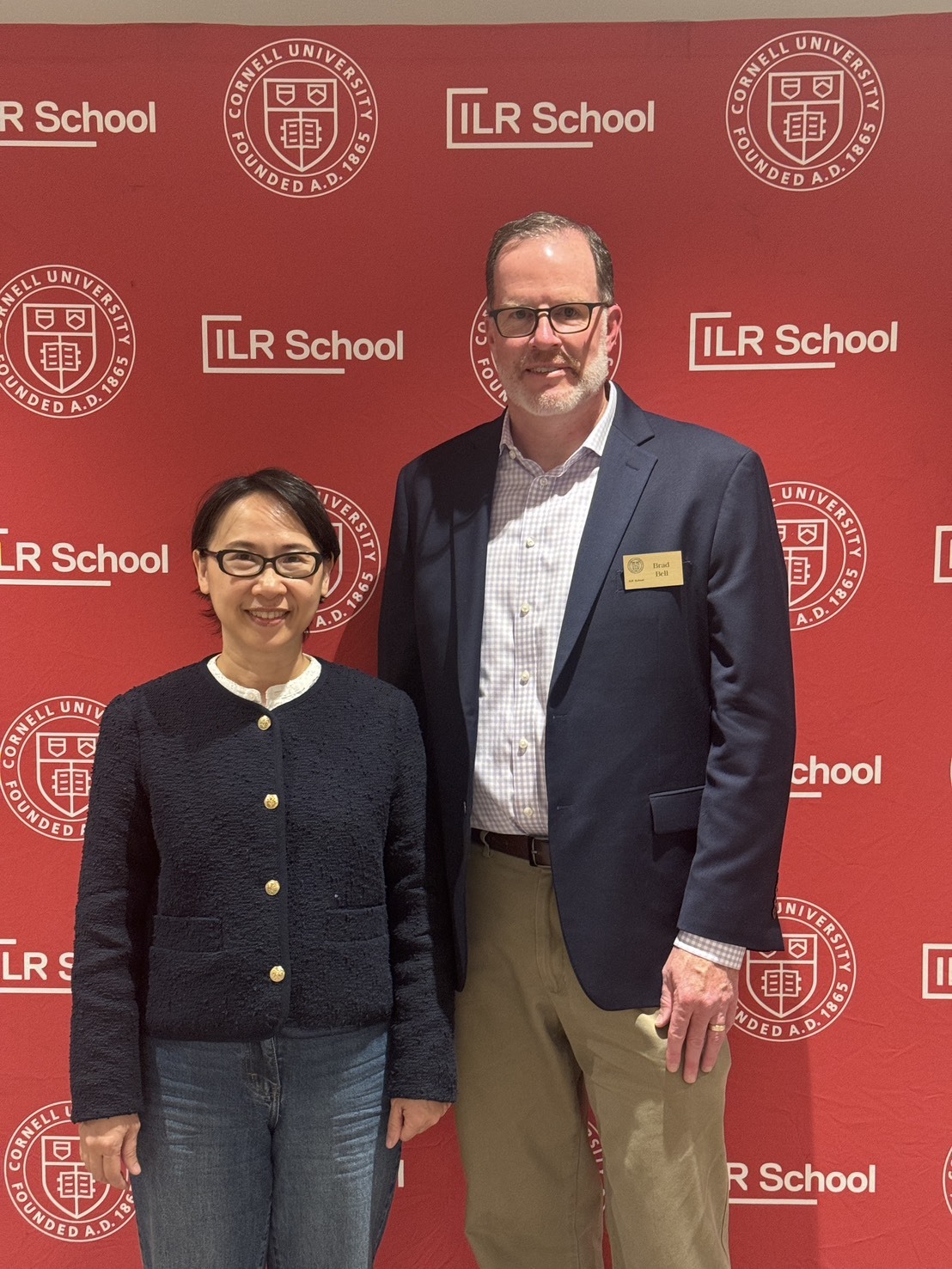
Professor Chiung-Wen Tsao from the Center for Strategy and Human Capital Research at National Sun Yat-sen University (also Research Fellow of the Center and Professor at the Department of Business and Management, National University of Tainan) was invited by Dr. Bradford Bell, Academic Director of CAHRS, to visit Cornell University from October 29 to October 30, 2025, and attend the annual Partner Meeting organized by the Center for Advanced Human Resource Studies (CAHRS) at Cornell ILR School.
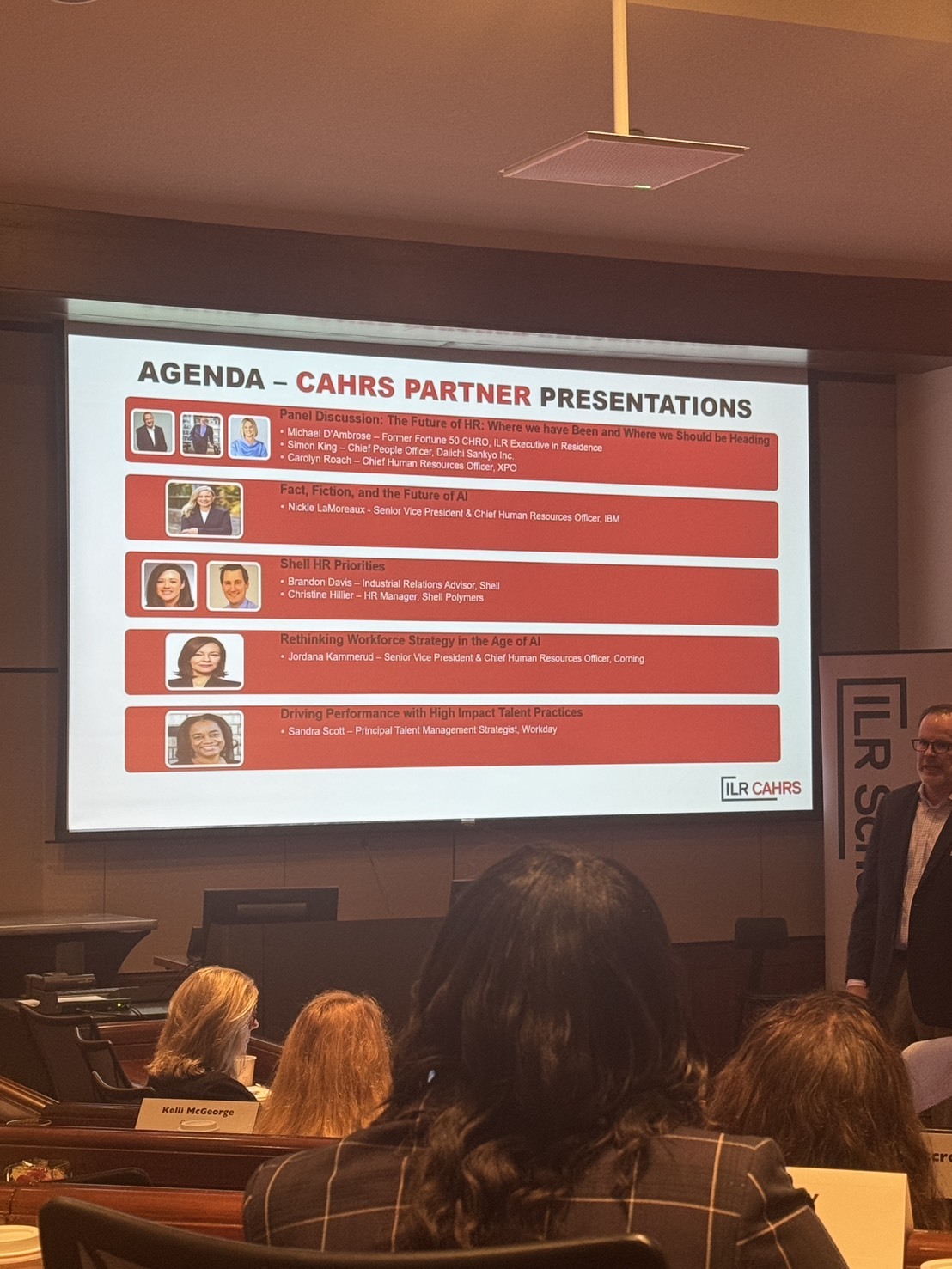
The 2025 CAHRS Partner Meeting featured a rich and diverse program, including four industry keynote speeches, two academic presentations, and one panel discussion with senior executives. A total of eight senior leaders from multinational corporations were invited to share insights across topics such as future HR trends, AI applications, organizational transformation, and talent strategies. Highlights included:
- Panel Discussion: The Future of HR - Former Fortune 50 CHROs, global CPOs, and leading scholars jointly discussed HR’s historical evolution, current challenges, and future directions.
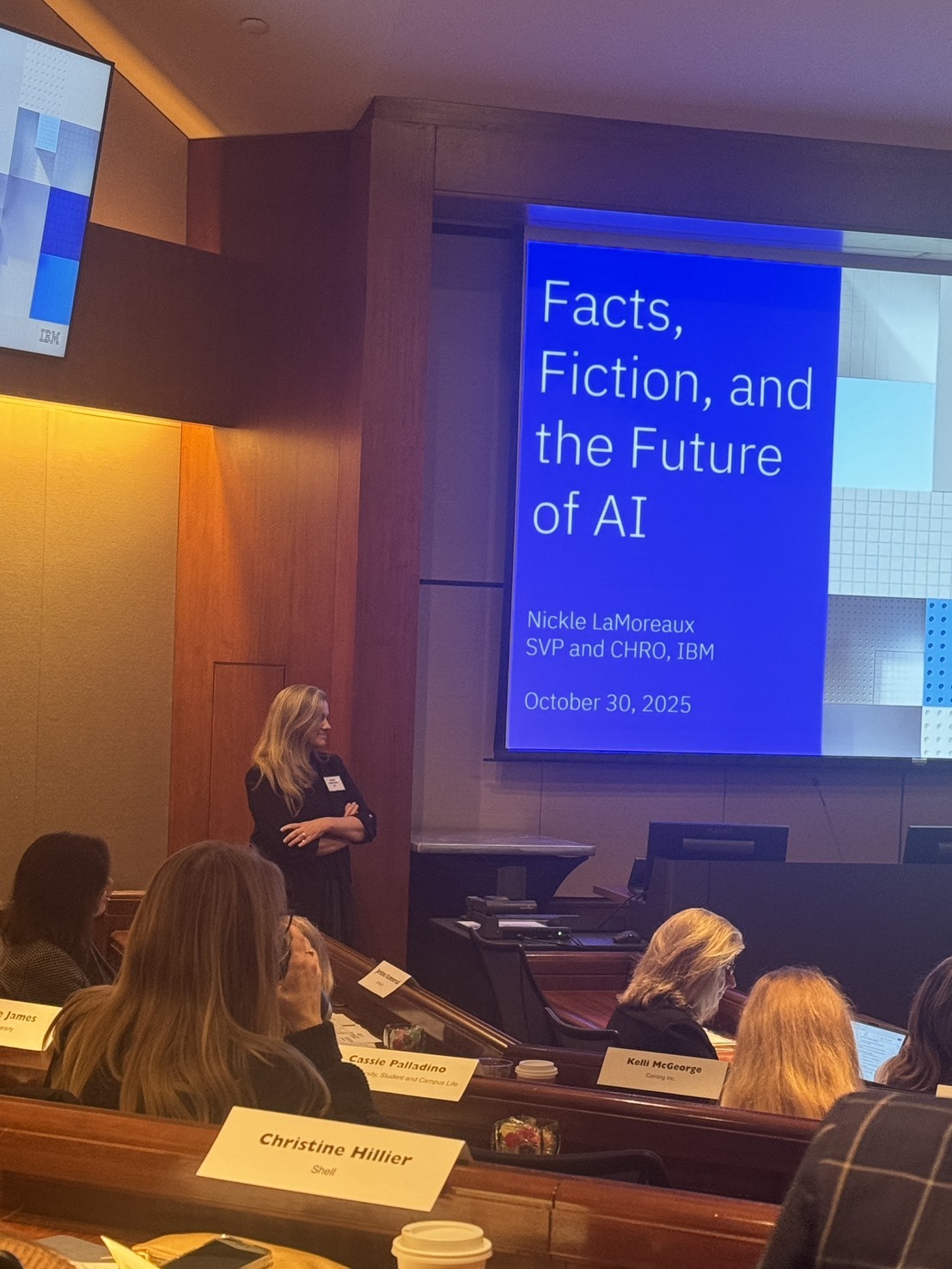
- Keynote Speech: “Fact, Fiction, and the Future of AI” (by IBM CHRO) - Focused on the evolution of AI in HR systems, governance issues, and the redefinition of talent value.
- Shell HR Priorities (Shell)
- Rethinking Workforce Strategy in the Age of AI (Corning CHRO)
- Driving Performance with High Impact Talent Practices (Workday)
During the meeting, the CAHRS team also introduced its World-Class HRBP Framework, which covers three major dimensions—talent & leadership, organizational effectiveness, and employee value proposition—highlighting the pivotal strategic role of Human Resource Business Partners (HRBPs) in bridging strategy and cross-functional execution.
Fact, Fiction, and the Future of AI: The Impact of AI on HR and the Challenges of AI Governance
One of the most compelling highlights of the meeting was the keynote delivered by IBM Senior Vice President and CHRO, Nickle LaMoreaux. She recounted IBM’s journey in adopting AI since 2017. At the time, IBM placed high hopes on IBM Watson to transform HR operations. However, the tool proved difficult to use, often delivering irrelevant responses and complicating workflows—resulting in employee frustration and inefficiencies.This experience taught IBM a critical lesson: implementing technology does not automatically improve processes or user experience.
Building on these learnings, IBM rebuilt its AI-powered HR support system with a user-centric approach, focusing on the growing demand for faster and more personalized HR assistance. This led to the creation of the widely adopted AskHR generative AI platform.Unlike earlier attempts, AskHR emphasizes being accurate, fast, and easy to use. It integrates fragmented systems into a single intelligent platform that streamlines workflows and delivers immediate, reliable support.
As of 2025, AskHR handles 11.5 million inquiries annually, resolves 94% of employee HR questions, reduces HR operating costs by 40%, and provides instant responses on payroll, performance, leave, benefits, and policies. Manager adoption has reached 100%, and AskHR now serves as the primary HR gateway for hundreds of thousands of IBM employees across 170 countries—dramatically enhancing service experience and enabling HR professionals to focus on high-value strategic work.
AI Governance: A More Difficult Challenge Than Technology Itself
As AI permeates workplaces, the toughest challenge is no longer the technology but its governance. Organizations must manage transparency, explainability, risk control, bias prevention, and determine which decisions require human judgment and where accountability must remain human-driven.
Without proper governance, AI creates disorder—not innovation.
The keynote emphasized that while AI may replace many administrative tasks, it cannot replace HR’s contributions in strategy, transformation, culture, and talent development. With technology taking over routine operations, HR is becoming an indispensable strategic partner that drives organizational sustainability and aligns people strategies with corporate goals.
Future Collaboration
After the meeting, Professor Tsao and Dr. Bell further discussed potential avenues for long-term collaboration. CAHRS proposed jointly organizing a CAHRS Member Roundtable in Taipei in 2026, inviting its global corporate members under the CAHRS banner. In addition, a special lecture will be arranged at National Sun Yat-sen University in Kaohsiung to strengthen industry–academia–research engagement.
Dr. Bell also provided preliminary feedback on the draft Memorandum of Understanding (MOU) between the two institutions, which is expected to be formally signed during his future visit to Taiwan—laying the foundation for long-term collaboration.
Photo Highlights
(Left) Professor Tsao with Dr. Bradford Bell, Academic Director of the ILR School and CAHRS
(Center) CAHRS Partner Meeting Speaker: Nickle LaMoreaux (IBM Senior Vice President and CHRO)
(Right) CAHRS Partner Meeting Program Display